
09
Oct
Sloped yards, drainage challenges, and changing Nebraska weather can make it difficult to get the most from an outdoor space. For homeowners in Elkhorn, NE, a well-planned retaining wall can turn an awkward grade into a more functional, attractive, and manageable part of the landscape.
A retaining wall can provide five major benefits: controlling soil movement, improving drainage management, creating usable outdoor space, adding structure to landscape design, and supporting long-term landscape stability. The right design depends on the property’s grade, soil conditions, drainage patterns, and intended use, so the wall should be planned as part of the overall landscape rather than treated as a decorative feature alone.
What local homeowners should know
- Retaining walls can help manage elevation changes and reduce unwanted soil movement on sloped properties.
- Drainage is especially important because water needs a planned route rather than collecting behind a retaining wall.
- Eastern Nebraska’s freeze-thaw cycles can affect soil and hardscape materials, making proper preparation important.
- Retaining walls can create flatter areas for lawns, planting beds, patios, and other landscape features.
- Taller or structurally complex walls may require additional design, engineering, or permit considerations.
Why Do Retaining Walls Matter for Elkhorn Landscapes?
Retaining walls matter in Elkhorn because they can help landscapes handle grade changes, soil movement, runoff, and seasonal weather while creating more useful outdoor space. Properties throughout the Omaha metro can experience heavy rain, winter freezes, spring thaw, and changing soil moisture, all of which should be considered when designing a wall.
In Douglas County and nearby communities such as Omaha, Bennington, and Waterloo, landscapes can range from relatively level lots to properties with noticeable elevation changes. A slope may look manageable until rainfall sends water and loose soil toward a lawn, planting bed, patio, or other low point.
Green Inc. Outdoor Solutions helps property owners consider retaining walls as part of the larger landscape. We look at how grading, drainage, planting areas, and outdoor living spaces work together so a wall can serve both practical and visual purposes.
1. How Can a Retaining Wall Help Control Soil Movement?
A retaining wall can help control soil movement by supporting changes in grade and holding soil where the landscape design calls for it to remain. On sloped Elkhorn properties, this can be especially useful where runoff and repeated wet-dry or freeze-thaw cycles contribute to erosion and gradual changes in the landscape.
Without adequate support, exposed slopes may slowly lose soil during rain events. Mulch can wash downhill, planting beds can lose their shape, and low areas can collect sediment.
A retaining wall creates a defined transition between elevations. Instead of relying on a steep slope, the landscape can be divided into more controlled levels.
Local Field Observation
For eastern Nebraska landscapes, the wall itself is only part of the solution. Proper grading, a stable base, suitable backfill, and drainage are also important because water pressure behind a wall can contribute to movement or failure.
That makes drainage planning particularly relevant during periods of heavy rainfall and spring thaw. A wall should manage the grade without unintentionally trapping water where it can create another landscape problem.
2. How Can a Retaining Wall Improve Drainage Management?
A properly planned retaining wall can improve drainage management by helping control how soil and water move across changes in elevation. The goal is not simply to block runoff but to incorporate grading and drainage measures that direct water appropriately around the landscape.
This matters around homes in Elkhorn and the surrounding Omaha area because seasonal storms can deliver significant rainfall over short periods. If a yard naturally slopes toward a patio, planting bed, or foundation area, uncontrolled runoff can become a recurring concern.
Drainage features associated with a retaining wall may vary depending on the site. Gravel, drainage pipe, grading, and appropriate outlets can all play roles in managing water.
The exact solution should reflect where water currently comes from and where it can safely go. Simply building a wall across an existing drainage path without addressing that question can create additional problems.
3. Can a Retaining Wall Create More Usable Yard Space?
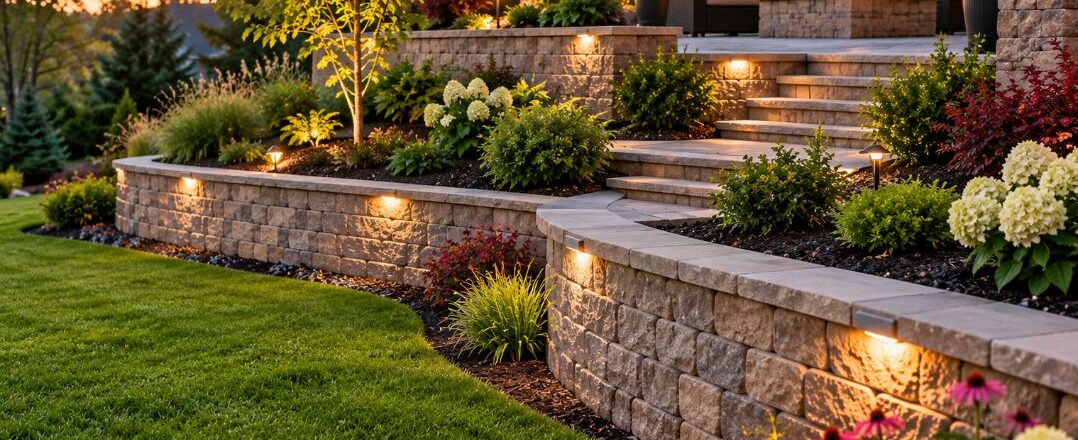
A retaining wall can create more usable yard space by turning portions of a slope into flatter, better-defined areas. Depending on the property’s layout, those areas may support planting beds, lawn space, seating areas, pathways, or other outdoor features that would be difficult to use on a steep grade.
This can be valuable on Elkhorn properties where a backyard has enough elevation change to limit furniture placement, mowing, planting, or everyday recreation.
Terracing is one option. Instead of one continuous slope, multiple landscape levels can create distinct areas with separate purposes. A lower level might connect to an outdoor living area, while an upper level could become a planting bed or lawn.
The result is not necessarily more square footage. It is a more intentional use of the space already available.
4. How Does a Retaining Wall Improve Landscape Design?
A retaining wall can improve landscape design by adding structure, defining different outdoor areas, and creating visual transitions between elevations. Materials, wall height, curves, planting beds, and surrounding hardscape can all influence whether the wall feels integrated with the property or added as an afterthought.
Around Elkhorn and western portions of the Omaha metro, retaining walls can complement a wide range of home and landscape styles. They can border raised planting areas, frame steps, separate lawns from patios, or create distinct zones within a backyard.
Material selection also affects the finished appearance. Color, texture, scale, and pattern should work with existing features such as patios, walkways, exterior finishes, and other hardscaping.
A functional wall does not have to look purely structural. Thoughtful planning allows it to become part of the landscape’s overall design.
5. How Can a Retaining Wall Support Long-Term Landscape Stability?
A retaining wall can support long-term landscape stability when it is designed for the property’s grade, soil, water movement, and expected loads. Correct construction helps the wall resist pressures from retained soil while reducing the chance of leaning, shifting, settling, or separating over time.
Nebraska’s seasonal conditions make these details particularly important. Soil moisture can change throughout the year, while freezing and thawing can affect both soil and hardscape installations.
A wall that appears straightforward at ground level may be supporting substantial pressure behind it. Height, slope, nearby structures, drainage, and additional loads above the wall can all affect design requirements.
For that reason, larger or more complex retaining wall projects should be evaluated professionally rather than approached as simple decorative edging.
What Are the Warning Signs of Retaining Wall Problems?
Retaining wall problems often appear as visible movement, drainage trouble, or changes in the soil surrounding the structure. Elkhorn property owners should pay attention to developing symptoms because early evaluation can help determine whether the issue is cosmetic, drainage-related, or structural.
Watch for:
- A wall that is beginning to lean or bow outward.
- Individual blocks or sections shifting out of alignment.
- Water repeatedly pooling behind or near the wall.
- Soil washing through joints or around the ends of the wall.
- Cracks or separation developing within the wall system.
- Depressions or settling in the ground behind the wall.
- New erosion channels forming after storms.
- Portions of the wall changing position after winter freeze-thaw cycles.
When Should You Call a Professional About a Retaining Wall?
A professional should evaluate a retaining wall when significant grade changes, persistent drainage problems, visible wall movement, nearby structures, or substantial loads are involved. Homeowners can monitor minor surface changes, but structural movement and recurring water issues require a closer look at what is happening behind and beneath the wall.
A professional evaluation is also useful before constructing a new wall on a challenging site. The layout should account for drainage, soil, wall height, nearby improvements, and the intended use of the area above and below the wall.
Local permit or engineering requirements may also apply depending on the project’s dimensions and conditions. Requirements should be verified for the specific property and project before construction begins.
What Commonly Causes Retaining Wall Problems in Eastern Nebraska?
Retaining wall problems in eastern Nebraska commonly involve drainage, inadequate base preparation, soil pressure, freeze-thaw movement, or a design that does not match site conditions. These factors can interact, so the visible problem may not reveal the underlying cause.
Water management is a major consideration. Water accumulating behind a wall adds pressure and can affect the surrounding soil. Seasonal freezing can further complicate conditions when moisture is present.
Base preparation is another critical factor. A retaining wall needs appropriate support underneath it, and settling can cause sections to shift out of alignment.
Finally, the wall must be suitable for its height and site. A low landscape border and a substantial wall supporting a steep grade do not have the same structural demands.
How Can Homeowners Maintain a Retaining Wall?
Homeowners can maintain a retaining wall by regularly checking drainage, watching for movement, controlling erosion, and keeping nearby landscape features from interfering with water flow. Spring and fall are useful times for inspections in Elkhorn because they allow homeowners to spot changes after winter and before the next freeze cycle.
Check the wall after heavy storms as well. Look for pooling water, soil loss, new gaps, leaning, or displaced materials.
Keep drainage outlets clear where they are accessible and avoid making major grading changes around the wall without considering how those changes will affect runoff.
DIY maintenance is appropriate for simple tasks such as removing debris and monitoring conditions. Repairs involving significant movement, structural concerns, or drainage modifications should be professionally evaluated.
What Results Can You Expect From a Well-Planned Retaining Wall?
A well-planned retaining wall can provide a more stable grade, better-defined landscape areas, improved use of sloped space, and more controlled water management. The exact results depend on the property, but the best projects solve a specific landscape challenge while fitting naturally into the overall outdoor design.
For local homeowners, that may mean creating a flatter lawn, establishing a raised garden, supporting an outdoor living area, or controlling a slope that repeatedly erodes.
The key is treating the retaining wall as part of a complete landscape system rather than an isolated structure.
What Retaining Wall Mistakes Should Elkhorn Homeowners Avoid?
The most common retaining wall mistakes involve overlooking drainage, underestimating structural requirements, and choosing a design based primarily on appearance. A better approach is to start with site conditions and then select materials and design details that support both function and aesthetics.
Mistake: Ignoring drainage.
Consequence: Water can collect behind the wall and increase pressure.
Better approach: Plan where water will enter, travel, and discharge before construction.
Mistake: Building on an inadequate base.
Consequence: Sections of the wall may settle or move unevenly.
Better approach: Prepare the base according to the wall system and site conditions.
Mistake: Treating every wall as a DIY project.
Consequence: Taller or heavily loaded walls can involve structural considerations that are easy to underestimate.
Better approach: Get professional guidance when the wall retains substantial soil or sits near important property features.
Mistake: Focusing only on the wall.
Consequence: The finished feature may not integrate well with patios, plantings, steps, or drainage.
Better approach: Plan the wall as one element of the larger landscape.
What Is a Common Retaining Wall Scenario in Elkhorn?
A common Elkhorn scenario is a backyard that slopes away from one portion of the property and leaves homeowners with an area that is difficult to mow, landscape, or use comfortably. Rain may also move mulch or soil downhill, making the slope harder to maintain.
A possible solution is to use a retaining wall to create a defined elevation change, then incorporate planting or usable landscape space around it. Drainage still needs to be addressed so runoff is managed rather than simply redirected to another problem area.
This is a representative local scenario, not a specific customer project.
What Landscape Services Can Support a Retaining Wall Project?
Landscape services that support a retaining wall project can include site planning, grading, drainage considerations, hardscape installation, and surrounding landscape improvements. Coordinating these elements helps ensure the wall serves a clear purpose and fits the rest of the property.
At Green Inc. Outdoor Solutions, we can help homeowners explore how a retaining wall may fit into a broader landscape plan.
Should You Build a Retaining Wall Yourself or Hire a Professional?
DIY retaining wall installation can be suitable for some small, straightforward landscape projects, while professional installation is generally more appropriate when significant height, slope, drainage, soil pressure, or nearby structures increase complexity. The decision should reflect the wall’s function rather than appearance alone.
A small decorative garden wall is different from a structure holding back a substantial amount of soil. Professional planning becomes more valuable as the consequences of movement or drainage failure increase.
For properties around Douglas County, homeowners should also verify applicable local requirements before starting a larger project.
Where Are Retaining Wall Services Available?
Retaining wall and landscape needs occur throughout Elkhorn and nearby western Omaha communities, including areas around Bennington and Waterloo. Property grades and drainage conditions vary from lot to lot, so recommendations should be based on the individual site rather than the community name alone.
What Can Happen If a Retaining Wall Problem Is Ignored?
Ignoring a retaining wall problem can allow soil movement, drainage issues, erosion, or structural displacement to become more extensive. In eastern Nebraska, repeated storms and seasonal freeze-thaw cycles can continue placing stress on an already compromised area.
A small change does not automatically mean a wall is failing, but continued movement deserves attention. Evaluating the cause early can clarify whether monitoring, drainage improvements, repair, or a larger solution is appropriate.
FAQ
Do I need a retaining wall for a sloped yard in Elkhorn, NE?
A retaining wall may help if your sloped yard has erosion, difficult-to-use areas, or a grade change that needs support. Not every slope requires a wall. The best solution depends on steepness, soil conditions, runoff, nearby structures, and what you want to accomplish with the landscape.
How does Nebraska weather affect retaining walls?
Nebraska weather can affect retaining walls through changing soil moisture, heavy rainfall, freezing temperatures, and freeze-thaw cycles. Proper base preparation and drainage help a wall handle these conditions. Homeowners should inspect walls after winter and significant storms for movement, erosion, pooling water, or other noticeable changes.
Can a retaining wall help with drainage in Elkhorn?
A retaining wall can be part of an effective drainage plan, but the wall itself does not automatically solve drainage problems. Proper grading, backfill, drainage materials, and suitable outlets may be necessary. The design should direct water appropriately instead of trapping it behind the wall or sending it toward another vulnerable area.
Can retaining walls make small yards more usable?
Yes, retaining walls can make some small or sloped yards more usable by creating flatter, defined landscape zones. Depending on the site, those areas can accommodate lawns, gardens, pathways, or outdoor living features. The available space, grade, drainage, and wall requirements determine what is practical for a specific property.
When should an Elkhorn retaining wall be inspected?
An Elkhorn retaining wall should be inspected when you notice leaning, bowing, shifting materials, soil loss, persistent pooling, or significant settling. Seasonal checks after winter and major rain events are also useful. Visible movement should receive closer attention because it may indicate a base, drainage, soil pressure, or structural issue.
Are retaining walls only for steep properties in Douglas County?
No, retaining walls are not limited to steep properties in Douglas County. They can also define smaller elevation changes, create raised planting areas, support landscape transitions, or improve the usability of moderately sloped yards. The appropriate wall type depends on how much soil it retains and the surrounding site conditions.
How long should a retaining wall last in eastern Nebraska?
Retaining wall service life varies based on material, design, installation quality, drainage, soil conditions, maintenance, and exposure. Because these variables differ between properties, there is no single lifespan that applies to every eastern Nebraska wall. Proper planning and timely attention to drainage or movement can help reduce avoidable deterioration.
What should I consider before adding a retaining wall near Omaha?
Before adding a retaining wall near Omaha, consider the property’s grade, runoff patterns, soil, wall height, intended use, nearby structures, and existing landscape features. Local requirements should also be checked when appropriate. Starting with site conditions helps determine whether a wall is suitable and what type of design the property needs.
Make More of Your Elkhorn Landscape
A well-designed retaining wall can do more than hold soil in place. It can help manage a challenging grade, create usable space, support drainage planning, and bring definition to an outdoor environment. We can help you determine how a retaining wall fits your property and broader landscape goals.
Create a More Functional Landscape
Thoughtful planning starts with understanding your property’s grade, drainage, and outdoor goals.